UN General Assembly Opens With Warnings Over War, Inequality, Climate Change and AI
World leaders opened the UN General Assembly’s annual high-level debate with warnings that conflict, inequality, climate change and artificial intelligence are placing growing pressure on the international system, while calls intensified for Security Council reform and stronger respect for international law.
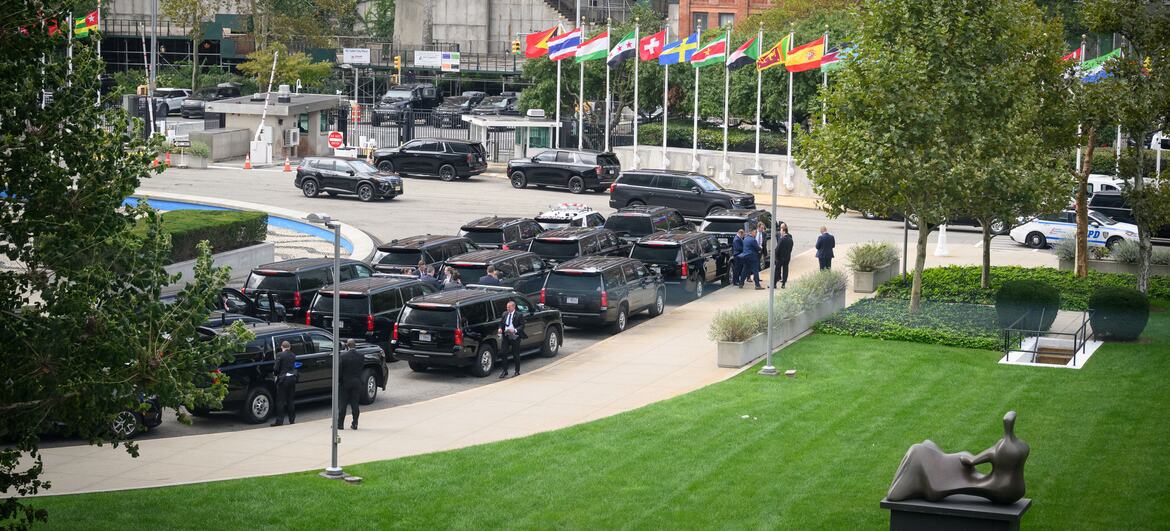
World leaders have opened the United Nations General Assembly’s annual high-level debate in New York against a backdrop of war, deepening inequality, climate pressures and rapid advances in artificial intelligence.
The first day of debate reflected growing concern that the international system is struggling to respond effectively to some of the world’s most serious crises.
UN Secretary-General António Guterres warned that global divisions are widening and said the choices countries make in dealing with conflict, inequality, climate change and artificial intelligence will have major consequences for humanity’s future.
In what was described as his final address to the General Assembly, Guterres urged governments to defend international law and ensure that rules agreed by nations are not replaced by the power of individual states.
His message reflected one of the strongest themes running through the opening day: concern that institutions created to prevent conflict and encourage cooperation are coming under increasing pressure.
Several leaders questioned whether the United Nations and other international institutions are still capable of responding quickly and consistently when major crises emerge.
General Assembly President Khalilur Rahman said the debate over the UN is increasingly focused not simply on whether the organisation is necessary, but on whether it can deliver meaningful results.
That concern has renewed calls for reform across the organisation.
One of the biggest areas of discussion was the UN Security Council, whose structure and ability to respond to major international conflicts have long been the subject of disagreement.
A number of leaders argued that the Council no longer adequately reflects the political and economic realities of the modern world.
Calls for greater African representation were particularly prominent.
Africa is home to more than 50 countries, yet the continent has no permanent seat on the Security Council.
Several leaders argued that maintaining such a system weakens confidence in international decision-making and leaves a major part of the world without permanent representation in one of the UN’s most powerful institutions.
The wider debate also focused heavily on the importance of applying international law consistently.
Speakers argued that rules governing war, civilian protection and humanitarian assistance lose credibility when countries believe those principles are enforced differently depending on which state or conflict is involved.
The war in Gaza became one of the clearest examples raised during those discussions.
Leaders from different regions referred to the conflict while questioning whether the international community is doing enough to uphold the same standards of civilian protection and international law everywhere.
For many speakers, the concern extended beyond Gaza itself.
The broader question was whether international rules can remain credible if governments and populations begin to believe that those rules apply differently depending on political alliances or national interests.
Despite the concerns raised throughout the opening day, the debate was not entirely focused on failure.
Several leaders pointed to examples of diplomacy and regional cooperation as evidence that countries can still achieve progress when they choose dialogue over confrontation.
Their argument was that the international system may require significant reform, but cooperation between countries remains necessary because many of today’s biggest challenges cannot be addressed by individual nations acting alone.
Climate change is one example.
The effects of rising temperatures, extreme weather and changing environmental conditions cross national borders and often affect countries that contributed relatively little to global emissions.
Artificial intelligence presents another challenge that increasingly requires international cooperation.
As AI systems become more powerful and widely used, governments are facing questions about regulation, economic disruption, security, misinformation and whether developing countries will have an equal opportunity to benefit from the technology.
Inequality was another recurring concern.
Differences in access to wealth, development, technology and political influence continue to shape relationships between countries and within societies.
Together, these issues created a serious tone for the opening of the General Assembly debate.
But beneath the warnings was also a defence of multilateralism — the idea that countries should continue working through international institutions rather than relying only on individual national power.
The debate over the United Nations is therefore increasingly becoming a debate about reform rather than simply survival.
Many governments appear to agree that global cooperation remains necessary.
Where they continue to disagree is over how international institutions should change, who should hold greater influence and how global rules should be enforced.
For the United Nations, those questions are becoming increasingly difficult to avoid.
As conflicts continue, new technologies reshape economies and climate risks increase, the pressure on the organisation will not simply be to provide a forum where world leaders can speak.
It will be to demonstrate that international cooperation can still produce meaningful results.