South Africa Reverses Asylum Processing Directive After Violence in Johannesburg and Durban
South Africa has withdrawn an asylum-processing directive after unrest around refugee offices escalated in Johannesburg and Durban.
South Africa's Home Affairs Department has withdrawn a directive affecting asylum applications after refugee reception offices became overwhelmed and unrest involving foreign nationals and anti-migrant protesters escalated in Johannesburg and Durban.
The directive had instructed refugee reception offices to process applications following a Constitutional Court decision that found certain procedural restrictions affecting asylum seekers unconstitutional. Large numbers of applicants subsequently went to the offices, and the department said the situation developed into serious operational and public-safety problems within days.
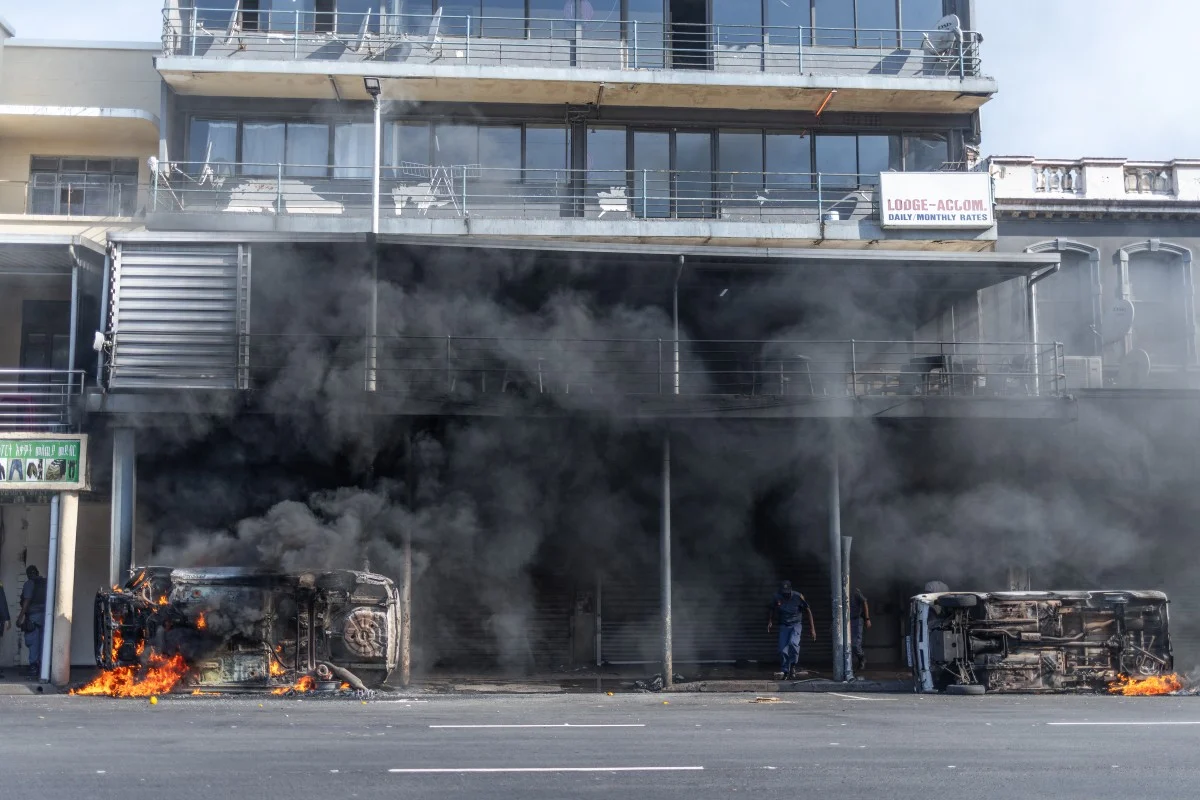
The department said it would begin a fresh process after withdrawing the instruction. Officials cited threats to public order and risks faced by staff as reasons for reversing the measure. The decision came after violence on Thursday in Soweto and the coastal city of Durban, where vehicles were burned and foreign-owned small businesses were looted.
In Durban, at least 14 vehicles were set on fire, while a municipal building was also burned. Police said three foreign nationals were arrested over the alleged assault of a South African protester. Soweto recorded at least 10 burned vehicles, alongside looting at small convenience stores. The disturbances followed demonstrations organised by groups campaigning against illegal immigration.
The latest clashes come amid a longer period of tension over migration in South Africa. The country has repeatedly experienced xenophobic violence over nearly two decades, with foreign nationals sometimes blamed for competition over employment and public resources. The source notes that such claims are disputed.
Immigration has also become a prominent issue ahead of South Africa's local government elections scheduled for November 4. Unemployment is above 30 per cent, adding another economic concern to public debate over jobs, migration and access to resources.
South African police have reported that at least four foreign nationals were killed during violence earlier in the year, although some African governments said the death toll was higher. Weeks of protests also prompted large numbers of migrants from elsewhere on the continent to leave the country.
Zimbabweans and Malawians accounted for the largest groups among those who departed, according to the source. Citizens of Ghana, Kenya, Lesotho, Mozambique, Nigeria and Uganda were also among those who left, with some assisted by their governments. Those departures contributed to diplomatic tensions between Pretoria and other African governments.
The withdrawal of the asylum-processing directive addresses the immediate administrative measure that preceded the latest surge in applicants, but the Home Affairs Department has indicated that a replacement approach will still need to be developed.