Renewed Fighting in Baidoa Deepens Somalia’s Hunger Crisis as Children Are Killed and Injured
Fresh fighting in Somalia’s Baidoa has killed and injured children and damaged a health facility, adding another layer of danger for families already struggling with displacement, severe hunger, malnutrition and shrinking humanitarian assistance.
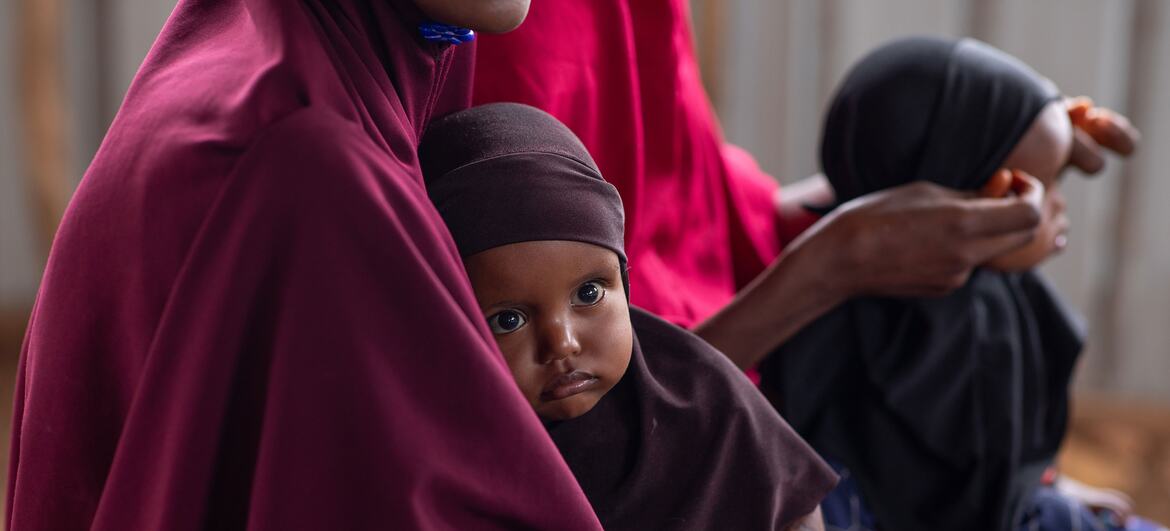
Children have been killed and injured in renewed fighting in Baidoa, Somalia, as violence adds to an already severe humanitarian crisis affecting families across the country.
The latest clashes erupted in Baidoa, the largest city in Somalia’s South West State, where government forces have been confronting fighters loyal to the region’s former president.
UN News reported that tensions had been building for several weeks before fighting intensified after thousands of local fighters entered the city.
A health facility was also damaged during the violence, raising further concern about access to medical care in a city where many families are already struggling with hunger, displacement and child malnutrition.
UNICEF said children were once again carrying a heavy share of the consequences of the fighting and called on all sides to protect civilians, schools and health facilities while allowing humanitarian organisations to reach people safely.
The violence comes at an especially dangerous time for Somalia.
Years of conflict, repeated droughts, displacement, high food prices and extreme weather have weakened the ability of millions of families to cope with new emergencies.
According to the latest food security assessment, around 5.4 million people are expected to face crisis levels of hunger or worse between October and December 2026.
Of those, approximately 1.5 million people are projected to face emergency levels of food insecurity.
Children are among those at greatest risk.
Nearly 1.92 million children under the age of five are expected to require treatment for acute malnutrition between July 2026 and June 2027, including about 433,000 children suffering from severe acute malnutrition, the most dangerous form of the condition.
Baidoa is one of the areas causing particular concern.
Around 26,000 displaced people in the city could face catastrophic levels of hunger under a worst-case scenario during the final months of the year, putting them at risk of famine if conditions deteriorate further.
The crisis is being made worse by the threat of severe flooding.
Heavy rains associated with the expected El Niño weather pattern could affect large parts of Somalia between October and December.
Flooding could destroy crops and livestock, cut communities off from markets and health facilities and force even more families from their homes.
Somalia’s disaster authorities estimate that between 2.5 million and 3.5 million people could be exposed to flooding, with as many as one million potentially displaced from farming and grazing areas.
For families already forced from their homes by conflict, another climate emergency could be devastating.
One such family is that of a Somali mother identified by the World Food Programme as Hawo.
Her family was displaced after a mortar struck their home in Baidoa and killed her father. Her brother later died during fighting, forcing her to flee with her young daughter to Mogadishu.
Her daughter eventually began losing weight and her appetite, signs that led the family to seek nutritional assistance.
Stories like Hawo’s illustrate how conflict and hunger often reinforce each other.
Families fleeing violence can lose their homes, farms, livestock and incomes. Once displaced, they may become dependent on humanitarian assistance at precisely the moment when aid organisations are struggling to find enough money to support everyone in need.
That is becoming a major problem in Somalia.
The World Food Programme says it once provided food assistance to more than four million people every month.
Today, funding shortages mean it can support only just over 670,000 people, despite millions facing serious food insecurity.
Some health and nutrition services have already been reduced or closed.
WFP says more than 1.1 million children and mothers are no longer receiving nutrition support following the closure of more than 230 nutrition centres.
Without additional funding, the organisation has warned that most children suffering from moderate acute malnutrition could lose access to assistance from October.
Somalia faced a similar danger during the severe drought of 2022.
At that time, a large-scale international humanitarian response helped prevent famine from being formally declared in several vulnerable areas.
Aid organisations are warning that the resources available today are far smaller compared with the scale of the current need.
The renewed violence in Baidoa therefore represents more than another security crisis.
Every outbreak of fighting can disrupt food supplies, damage health services, prevent aid workers from reaching vulnerable communities and force more people into displacement.
For children already weakened by malnutrition, even a temporary interruption in food or healthcare can become life-threatening.
UN agencies are calling for additional humanitarian funding, protection for civilians and safe access for relief workers.
They are also urging early preparations for the expected floods so that food, medicine and other essential supplies can be positioned in vulnerable areas before roads become inaccessible.
For families in Baidoa and elsewhere in Somalia, the coming months could bring several emergencies at once: conflict, hunger, malnutrition and flooding.
Whether those crises worsen will depend partly on whether fighting can be contained and whether humanitarian organisations receive enough support to reach people before conditions deteriorate further.