How the Singapore Sling Became One of the World’s Most Famous Cocktails
More than a century after becoming closely associated with Singapore’s Raffles Hotel, the pink Singapore Sling remains one of the country’s most recognisable drinks — even as historians continue to debate exactly how the famous cocktail began.
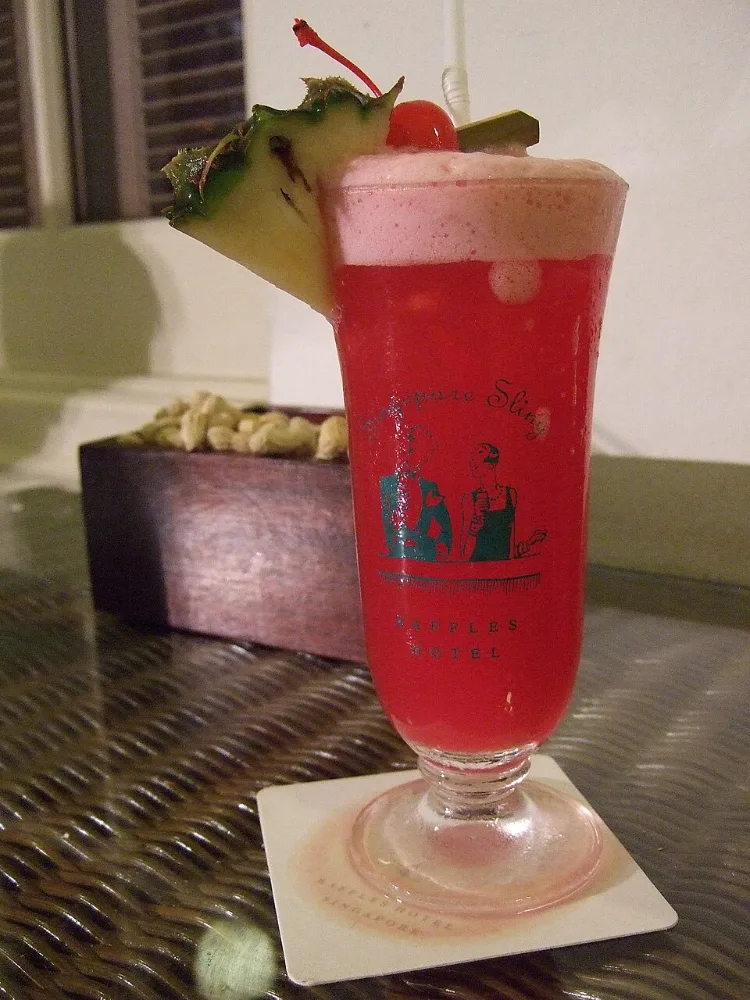
More than a century after the Singapore Sling became associated with one of Asia’s most famous hotels, the bright pink cocktail continues to attract visitors looking for a taste of Singapore’s history.
The drink is closely linked to the Long Bar at Raffles Singapore, where guests still order Singapore Slings alongside another unusual tradition: eating peanuts and brushing the shells onto the floor.
Raffles traces the cocktail to 1915 and a Hainanese bartender named Ngiam Tong Boon, who worked at the hotel’s Long Bar.
According to the hotel’s traditional account, social conventions in colonial Singapore made it unacceptable for women to openly drink alcohol in public. Women were more likely to be seen drinking tea or fruit juice while men ordered alcoholic drinks.
Ngiam is said to have responded by creating a cocktail that looked like fruit punch but contained gin and liqueurs.
Its pink colour helped disguise the drink as something resembling fruit juice, according to the story, allowing women to enjoy an alcoholic cocktail without openly challenging the social expectations of the period.
Whether every detail of that story happened exactly as it is now told, however, is less certain.
Historical research has complicated the popular version of the Singapore Sling's creation.
Researchers have found references to drinks called Singapore Slings in local newspapers before 1915, while cocktail historians have also documented different recipes and earlier versions of gin-based slings served in the region.
That means the Singapore Sling may have evolved over time rather than appearing suddenly from a single recipe.
Even the precise ingredients of the original drink remain a subject of debate.
Today, the version promoted by Raffles is a colourful mixture built around gin, cherry liqueur, pineapple juice and fresh lime juice.
It also includes Cointreau, Bénédictine, grenadine and a dash of Angostura bitters.
The result is the distinctive pink-red drink that has become familiar to visitors from around the world, usually finished with fruit garnish.
But cocktail historians have found older versions that were considerably simpler.
Some historical recipes contained gin, cherry brandy, citrus, bitters and soda without the large quantity of pineapple juice associated with the modern Raffles version.
The difficulty in identifying one definitive original recipe has helped turn the Singapore Sling into something unusual in cocktail culture: a famous drink with a recognisable identity but no universally accepted historical formula.
Raffles itself acknowledges that the Singapore Sling served today differs somewhat from Ngiam's supposed original creation.
Whatever uncertainty surrounds the exact recipe, the connection between the cocktail and Raffles Hotel has become deeply established.
The hotel first opened in Singapore in 1887 and eventually became one of the city-state's best-known landmarks.
Its Long Bar has developed into a destination in its own right.
The room draws on the atmosphere of Malayan plantation life from the early 20th century, and visitors are encouraged to drop peanut shells onto the floor — a custom that Raffles says developed from plantation owners who once gathered at the bar.
More than a century later, the Singapore Sling remains at the centre of the experience.
The drink has travelled far beyond the hotel where its modern identity was established. Versions can now be found in cocktail bars around the world, often with bartenders adjusting the balance of gin, fruit, sweetness and herbal liqueurs.
That global popularity has also produced considerable variation.
Order a Singapore Sling in one country and the drink may be noticeably different from the one served somewhere else.
Raffles, meanwhile, continues to build on the cocktail's reputation.
The hotel now uses locally distilled Brass Lion Singapura Gin in its Singapore Sling and has also introduced an alcohol-free version called the Singapore Sling Zero.
Released at the Long Bar in June 2026, the alcohol-free version uses a zero-alcohol spirit alongside the hotel's grenadine, pineapple and lime juices, tea, spices, orange peel and cherry.
The introduction of a non-alcoholic Sling shows how the hotel is adapting one of its oldest traditions to changing drinking habits while continuing to trade on the cocktail's history.
But the lasting importance of the Singapore Sling goes beyond its list of ingredients.
Over the decades, it has become closely associated with Singapore itself — part cocktail, part tourism experience and part piece of cultural storytelling.
Its precise beginnings may continue to be debated.
What is much harder to dispute is what happened afterwards: a pink gin drink connected to a hotel bar in Singapore became one of the most recognisable cocktails in the world.