DR Congo’s Ebola Fight Suffers Major Setback as Treatment Centre Burns Amid Escalating Violence
The destruction of an Ebola transit centre in eastern DR Congo has dealt another blow to efforts to contain the country’s deadliest outbreak, as violence forces thousands from their homes, disrupts patient care and restricts humanitarian access across several provinces.
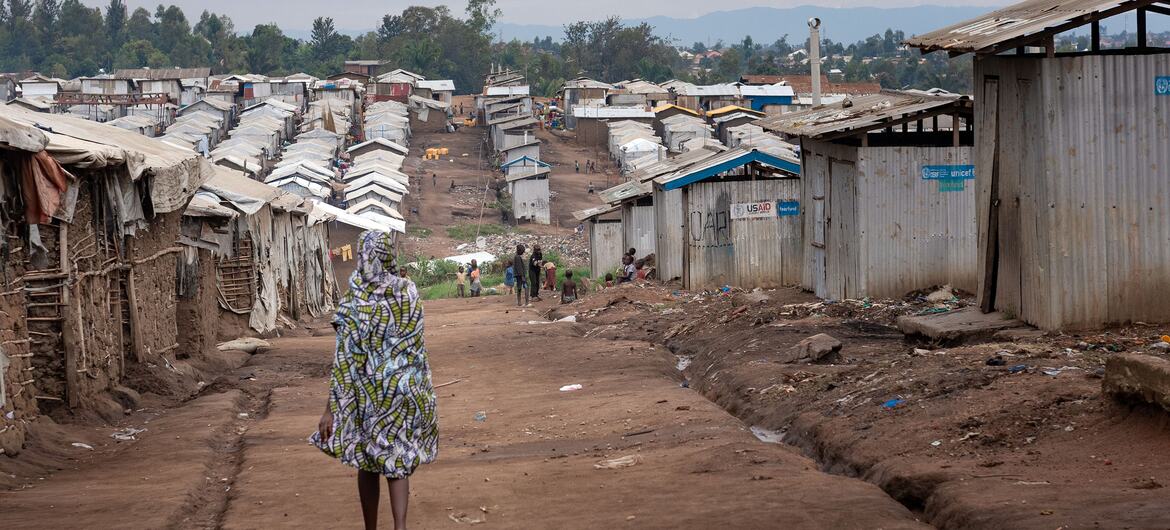
Efforts to contain the Democratic Republic of the Congo’s worst-ever Ebola outbreak have suffered another serious setback after a treatment transit centre was destroyed by fire in the conflict-hit eastern province of Ituri.
The facility was located at the Kigonze displacement camp and had been providing initial care and referral services for people suspected of having Ebola.
Its destruction comes at a particularly dangerous point in the outbreak, with health teams already struggling against widespread insecurity, difficult access to affected communities and shortages of trained personnel.
Julien Harneis, the United Nations official coordinating the Ebola response in DR Congo, said establishing treatment and transit centres in the east had required significant investment, personnel and logistical effort.
Losing one of those facilities means health authorities must rebuild capacity while patients in the surrounding area may have fewer options for receiving rapid treatment.
Thousands flee Kigonze
Kigonze had been home to around 19,000 people displaced by years of violence in eastern DR Congo.
The camp is now largely deserted.
Thousands of residents fled after reports that soldiers had entered the area searching for weapons and people suspected of links to non-State armed groups.
Gunfire was also reportedly heard during the security operations.
The Ebola transit centre was later destroyed by fire after most displaced families had already left the site.
Authorities and humanitarian organisations are now working to ensure that health facilities involved in the Ebola response receive greater protection.
The disruption at Kigonze is part of a much wider deterioration in security across Ituri.
More than 3,000 people also fled the Rhoe displacement camp in Djugu territory after fighting intensified on 27 September.
At least four people were reported killed and seven others injured, while several homes were burned in Blukwa.
Humanitarian organisations say women and children make up the majority of those displaced.
Fighting disrupts Ebola treatment
The continuing violence is making an already difficult public-health operation even harder.
Humanitarian access has been restricted in several health areas, including Fataki, Drodro and Lita.
Insecurity has delayed the movement of laboratory samples from Fataki to Bunia and disrupted efforts to transfer confirmed Ebola patients to treatment centres.
Some humanitarian organisations have temporarily suspended activities in affected locations because of the fighting.
These delays are particularly dangerous with Ebola because rapidly identifying, isolating and treating infected patients is critical to reducing transmission.
The security situation has also become deadly for people involved in the response itself.
Two people working as part of Ebola response efforts were reportedly killed in Lubero, North Kivu province, on 27 and 28 September.
Elsewhere in North Kivu, fighting in Masisi has displaced more than 24,000 people since the middle of September.
Violence has also been reported in South Kivu and Tanganyika provinces, forcing thousands of additional families from their homes and increasing pressure on humanitarian agencies.
UN humanitarian officials have called on all parties to the conflict to protect civilians, displacement camps and health workers and to allow aid organisations to reach communities safely.
More than 8,000 Ebola cases
The violence is unfolding during an Ebola emergency that has already reached an unprecedented scale in DR Congo.
The outbreak was declared a public-health emergency in May and has now spread across seven provinces: Bas-Uele, Haut-Uele, Ituri, North Kivu, South Kivu, South Ubangi and Tshopo.
More than 8,000 infections have been confirmed nationwide and the death toll is approaching 4,000.
It is the country’s 17th Ebola outbreak and has become the largest and deadliest the Democratic Republic of the Congo has ever recorded.
Ituri remains at the centre of the emergency, with intense transmission around Bunia and other affected communities.
The outbreak is being caused by the Bundibugyo virus, one of the viruses capable of causing Ebola disease.
WHO has warned that responders are dealing with two challenges at the same time.
In areas where transmission remains intense, teams need additional staff, beds, laboratories and burial teams to reduce infections.
At the same time, new hotspots must be identified and contained quickly before the virus becomes firmly established in additional communities.
Health system stretched
Mangala in Ituri illustrates the pressure facing the response.
According to the World Health Organization’s latest update, the area had recorded 341 confirmed cases, 149 deaths and 24 recoveries since its first infection was detected on 18 May.
Mangala lies about 45 kilometres from Bunia, but poor road conditions mean the journey can take nearly two hours.
The locality does not have its own Ebola treatment centre.
Patients must first pass through a local facility before being transferred either to Nizi, around 27 kilometres away, or to Bunia depending on bed availability and the patient’s circumstances.
That makes functioning transit centres particularly important.
The destruction of a facility such as the one at Kigonze therefore does more than damage a building. It removes part of the network needed to identify suspected cases, separate patients safely and move confirmed cases into specialist treatment.
WHO expands burial and treatment teams
Health authorities and international partners have been expanding the Ebola response as infections increase.
The number of mobile teams trained to carry out safe and dignified burials in Ituri has risen from 53 to 114.
An additional 57 community burial teams have been deployed across 11 health areas in Mangala and Fataki.
Safe burials are essential during an Ebola outbreak because the bodies of people who die from the disease can remain highly infectious.
Treatment capacity has also increased significantly.
WHO said the number of available patient beds rose from 929 in late July to 1,510 by 21 September across 54 health facilities in 34 health zones.
Hundreds of additional beds were being installed or planned, with health authorities aiming for roughly 1,830 beds.
But staffing has not kept pace.
WHO estimates that more than 1,400 additional health professionals are still needed to support the expansion.
Laboratory capacity has also been increased, with the number of operational laboratories rising from 15 to 26 and daily testing capacity increasing from roughly 200 samples to more than 450.
Ambulances have been deployed to support patient transfers, although poor roads, large distances and insecurity continue to slow the response.
A historic health emergency
The scale of the current outbreak has placed it beyond previous Ebola emergencies recorded in DR Congo, including the major epidemic between 2018 and 2020.
Only the West African Ebola epidemic of 2014 to 2016 remains larger.
That crisis infected more than 28,600 people and killed over 11,000 across Guinea, Liberia and Sierra Leone.
Health authorities in DR Congo are trying to prevent the current emergency from approaching that scale.
But the challenge is no longer purely medical.
Ebola responders are operating in communities affected by armed conflict, mass displacement, damaged infrastructure and deep humanitarian needs.
When violence forces people to flee, contact tracing becomes harder.
When roads become unsafe, laboratory samples take longer to reach testing facilities.
When treatment centres close or are destroyed, infected patients can face longer journeys before receiving care.
And when health workers themselves are attacked or killed, already stretched response teams lose people whose skills are difficult to replace.
The fire at Kigonze therefore represents more than the loss of one Ebola facility.
It illustrates how closely the health emergency and eastern DR Congo’s long-running security crisis have become connected.
Containing the outbreak will depend not only on more beds, laboratories and medical teams, but also on whether those teams can safely reach the communities that need them.