Airtel Money Sets $7 Billion Valuation for London IPO as Investors Offer $703 Million in Shares
Airtel Money has priced its London IPO at £1.96 per share, valuing the African mobile-money business at about $7 billion as existing investors prepare to sell roughly $703 million worth of shares ahead of its planned October listing.
Airtel Money has put a price on one of Africa’s largest mobile-money businesses as it prepares to become a separately listed company on the London Stock Exchange.
The fintech business has set its initial public offering price at £1.96 per share, giving Airtel Money an estimated market value of approximately £5.3 billion, or $7 billion, when its shares are admitted to trading.
The planned listing marks a significant moment for Airtel Africa, which is separating its fast-growing financial-services operation from its traditional telecommunications business while remaining a major shareholder.
It could also become one of London’s biggest stock-market debuts in recent years.
Existing investors are selling 270 million shares
Under the base offering, existing Airtel Money shareholders are expected to sell 270 million shares.
At £1.96 per share, those shares are worth approximately £529 million, equivalent to roughly $703 million.
An additional 27 million shares could be sold through an over-allotment option if demand is strong enough.
If that option is exercised in full, the total number of shares sold would rise to 297 million.
One important distinction is that Airtel Money itself will not receive most of the money generated by the IPO.
This is primarily a secondary sale.
That means the proceeds will go to shareholders who already own stakes in Airtel Money and are using the listing to sell part of their holdings.
This is different from an IPO in which a company issues new shares specifically to raise money for expansion.
Who is selling?
Shareholders expected to reduce their positions include major international investors that backed Airtel Money before the public listing.
They include The Rise Fund II Aurora, which is backed by private equity firm TPG, Qatar Holding, Mastercard and telecoms investor Chimetech.
These investors were among the institutions that previously bought stakes in Airtel Money as Airtel Africa prepared its mobile-money business for an eventual public listing.
Airtel Africa itself does not expect to sell shares in the main offering, although some shares could potentially be included through the over-allotment arrangement.
The telecoms group says it intends to remain a long-term strategic shareholder after Airtel Money becomes independently listed.
IFC commits up to $90 million
The International Finance Corporation, the private-sector arm of the World Bank Group, has also agreed to participate as a cornerstone investor.
The IFC has committed to purchase up to £67.2 million, or about $90 million, worth of Airtel Money shares at the IPO price.
Cornerstone investors commit to buying shares before an IPO is completed, giving the transaction additional support and potentially increasing confidence among other investors.
The IFC says Airtel Money provides mobile wallets, payments and wider financial services to millions of customers across Sub-Saharan Africa.
Airtel Money serves 53 million people every month
The valuation is supported by a business that has grown substantially beyond simple phone-based money transfers.
As of June 30, 2026, Airtel Money had approximately 53 million monthly active users across 13 African markets.
Its network also included more than 2.3 million agents, over 490,000 merchants and more than 3,700 enterprise customers.
Agents are particularly important to mobile money in Africa.
They allow customers to deposit physical cash into digital wallets and withdraw digital balances as cash, making mobile financial services accessible even in communities where traditional bank branches may be limited.
Airtel Money also supports services such as person-to-person transfers, merchant payments, utility bills and international money transfers.
$213 billion moved through the platform
The scale of transactions moving through Airtel Money has also increased rapidly.
The company processed approximately $213 billion in transaction value during the 12 months to June 2026.
That figure represents all of the money passing through its platform rather than Airtel Money’s own revenue.
For the financial year ending March 2026, Airtel Money generated approximately $1.35 billion in revenue.
Its adjusted earnings margin was around 50%, demonstrating why Airtel Africa’s mobile-money division has become increasingly important to the wider group.
The company says both its customer base and transaction volumes have grown rapidly over several years as more people across its markets adopt digital financial services.
The $7 billion figure is below earlier expectations
Before the IPO was formally priced, market reports suggested Airtel Money could seek a valuation of between $8 billion and $9 billion.
The final £5.3 billion valuation, equivalent to about $7 billion, therefore comes in below those earlier expectations.
That does not necessarily mean investors have rejected the company’s growth story.
IPO pricing is influenced by broader market conditions, investor demand and how aggressively existing shareholders want to price an offering.
A slightly lower valuation can sometimes be used to make shares more attractive to new investors and improve the chances of strong demand after trading begins.
The IPO itself has also become somewhat smaller than earlier projections.
Initial reports suggested Airtel Money could offer around $800 million worth of shares.
The base offering is now expected to raise about $703 million for selling shareholders.
Why Airtel Money chose London
Airtel Money considered several potential markets before deciding to list in London.
Its parent company, Airtel Africa, is already traded on the London Stock Exchange as well as Nigeria’s NGX.
London also provides access to a large pool of institutional investors familiar with emerging markets and African businesses.
For the London Stock Exchange, Airtel Money’s arrival is significant for another reason.
London has struggled in recent years to attract major technology listings, with some companies choosing the United States and other markets in search of higher valuations or deeper investor demand.
A transaction worth more than $700 million would therefore represent one of the larger IPOs the London market has seen recently.
Around 16.5% could be publicly traded
Following the IPO, approximately 16.5% of Airtel Money’s ordinary shares are expected to be in public hands if the over-allotment option is not exercised.
That could rise to around 17.5% if the additional 27 million shares are fully sold.
This portion of publicly available shares is known as the company’s free float.
A larger free float can make shares easier to trade because more stock is available to investors.
Airtel Money believes the size of its free float should also make the business eligible for inclusion in FTSE UK indices.
Being included in a major stock index can become important because investment funds that track the index may then need to buy shares in the company.
Trading is expected to begin in October
Conditional trading in Airtel Money shares is expected to begin on October 9, 2026.
Full admission to the London Stock Exchange and unconditional trading are scheduled for October 14.
The company intends to trade on the Main Market of the London Stock Exchange.
The listing will effectively allow investors to buy exposure specifically to Airtel Money rather than having to purchase Airtel Africa shares and gain exposure to both telecoms and financial services at the same time.
That could give the market a clearer way to value the mobile-money business independently.
Mobile money has become a major African financial system
Airtel Money’s IPO also reflects the scale mobile money has reached across Africa.
For millions of people, a mobile wallet functions as an everyday financial account.
Customers can send money, receive salaries, pay merchants, settle bills and move funds without relying on a conventional bank branch.
The model has become particularly important in countries where smartphone adoption and traditional banking penetration remain uneven.
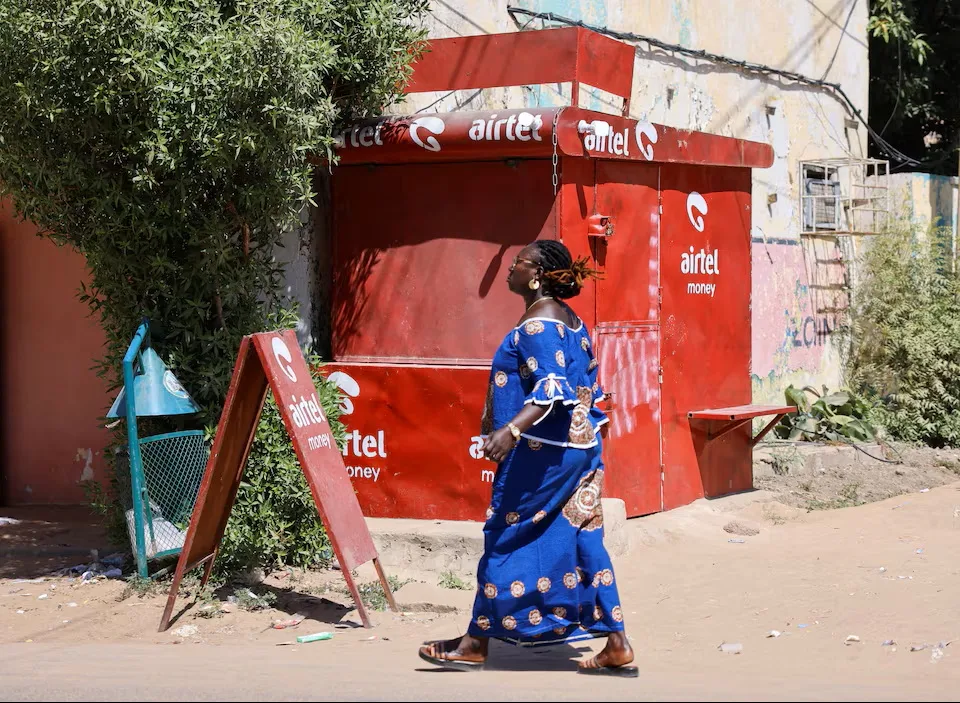
Mobile-money agents can operate from small stores, roadside kiosks and neighbourhood businesses, significantly expanding the physical reach of financial services.
For Airtel Money, the next stage of growth will depend partly on converting more Airtel telecommunications customers into financial-services users.
The company says around 41% of the relevant Airtel Africa telecom subscriber base currently uses Airtel Money, up from roughly 20% several years ago.
That means millions of existing Airtel customers remain potential mobile-money users.
It is becoming more than a transfer service
Mobile money companies are also expanding beyond basic transfers.
Platforms increasingly offer merchant payments, international remittances, savings-related products, credit and other financial services.
Airtel Money’s large agent network gives it a foundation from which to offer more products without having to build traditional banking branches.
Its digital infrastructure is designed to handle large transaction volumes, while a common platform can be deployed across several countries.
The business says its system currently processes around 700 transactions per second and has demonstrated capacity of more than 4,000 transactions per second during periods of peak activity.
That scalability will become increasingly important if its customer base continues growing.
A major test for African fintech valuations
The IPO will also be watched closely by Africa’s technology industry.
Most of the continent’s largest fintech companies remain privately owned.
Airtel Money’s listing will give public investors a rare opportunity to place a daily market value on a large African digital-finance business.
If the listing performs well, it could strengthen the case for other mature African fintech companies considering public markets.
It could also provide investors with another benchmark for judging what large African payments and mobile-money businesses are worth.
But public markets create new pressures too.
Once trading begins, Airtel Money’s valuation will move according to investor expectations around revenue growth, regulation, competition, foreign exchange and profitability.
The $7 billion figure is therefore only the starting valuation.
The market will decide what the company is worth after that.
For Airtel Money, the London listing represents the transition from being one of Airtel Africa’s fastest-growing divisions into a public company that investors will be able to evaluate on its own.
And for Africa’s fintech industry, it could become one of the most important public-market tests yet of how global investors value the continent’s digital-finance growth story.